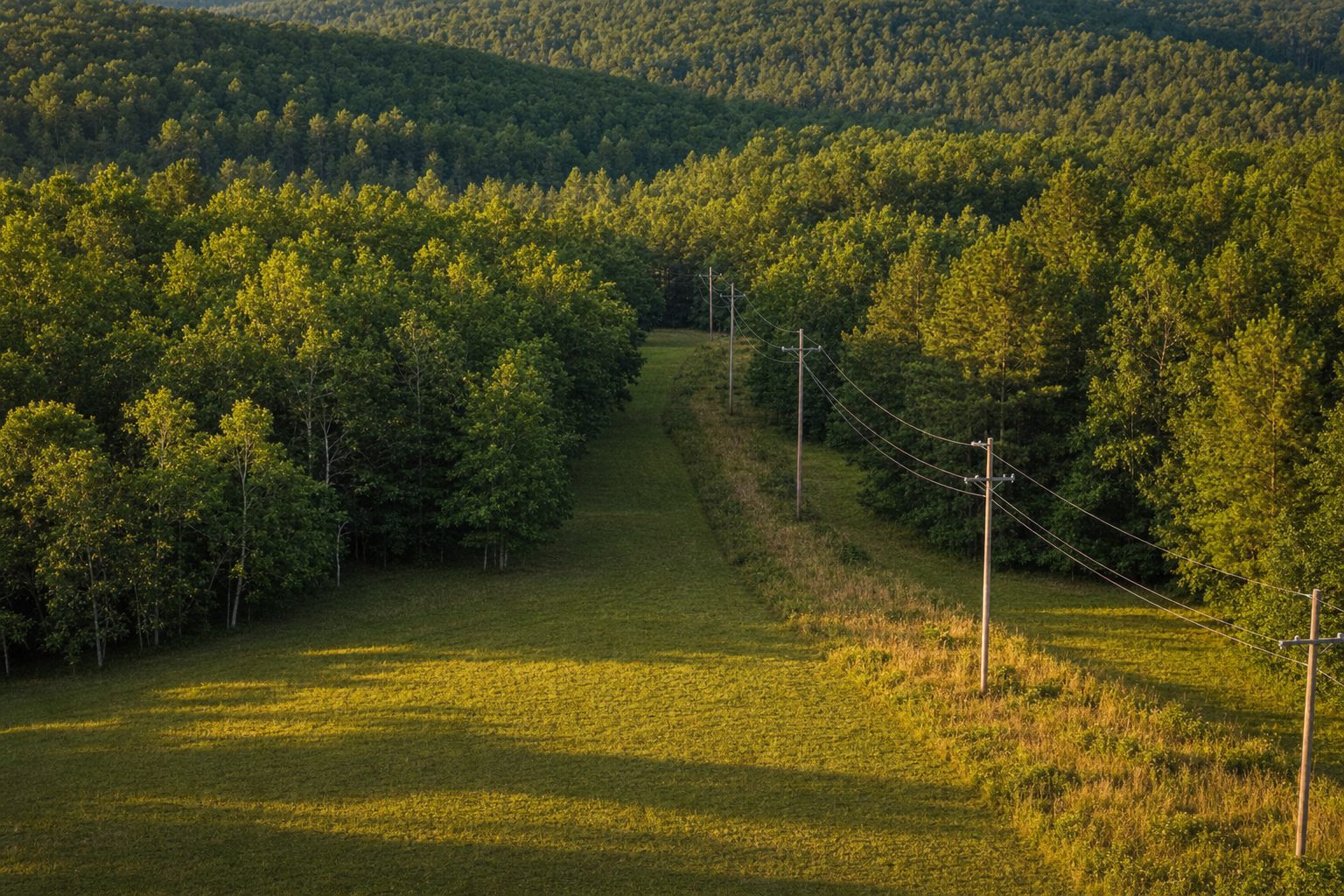
How to check for easements on land before you buy it
You need four documents, and it takes an afternoon: the assessor record, the recorded plat, the deed, and the clerk's index of instruments recorded against the parcel. Between them you find out who else holds a written right to use ground you are about to pay for. Not one of them costs anything to look at.
An easement is not a defect. Finding one late is.
What an easement actually is
A recorded right for someone who is not the owner to use a defined part of the property for a stated purpose.
You keep the title. You keep the tax bill. What you give up is exclusivity over that strip, and only for the purpose named in the document. A utility easement lets a provider run and maintain a line. An access easement, often written as ingress and egress, lets another parcel cross yours to reach a public road. A drainage easement keeps water moving through a channel that has to stay open.
Two things follow from that, and they are the two things buyers underestimate.
The first is that a recorded easement generally runs with the land. It survives the sale. Buying the lot does not cancel it, and the previous owner cannot hand you a clean strip they never had.
The second is that position matters more than existence. A ten foot utility easement along the road frontage of a lot is unremarkable and is often the reason power can reach the property at all. The same easement running diagonally through the middle of a quarter acre lot can erase the buildable centre. Same document, different consequence.
How to check for easements on land, document by document
Four sources. None of them requires a lawyer to open, though one of them is worth showing to a lawyer afterwards.
| Document | Where it lives | What it reveals |
|---|---|---|
| Assessor record | County assessor, usually online | Parcel number, acreage, legal description, current owner of record |
| Recorded plat | County clerk or recorder, in plat books | Dedicated easements and public right of way, drawn as dashed strips with widths |
| Deed | Recorded with the county | Easements reserved, excepted, or granted at the time the land was conveyed |
| Clerk's index of recorded instruments | County clerk or recorder | Standalone easement agreements recorded against the parcel at any later date |
Start at the assessor record, because everything downstream needs the legal description rather than the street address. For Izard County, Arkansas that record is public and free at actDataScout. If you are unsure why the address is not enough, I went through it in how to read a plat map.
Then read the plat for the addition your lot sits in. Dedicated easements appear as dashed lines set in from the boundary, usually labelled with a width. The strip along the street is right of way and is not yours either.
Then read the deed itself, in full, including the paragraph most people skip. Easements get created at conveyance and they live inside sentences beginning "subject to" or "reserving unto". My first parcel's deed was signed on April 15, 2026 and recorded on April 28, 2026 in Book 2026, Page 6725 of the Izard County record, and reading it is the same ten minutes whether you are the buyer or the seller. What a deed does and does not do is covered in who holds the deed on owner financed land.
The fourth step is the one people skip, and it is the only one that catches a separately recorded easement agreement. Ask the clerk to search recorded instruments against the parcel. An easement granted five years after the plat was drawn will not be on the plat, and will not be in a deed you were handed.
What will a records search not tell you?
Recorded documents catch recorded rights. They do not catch rights created by conduct.
A route across a parcel that has been used openly for years can, in some circumstances, ripen into a right even though nobody ever wrote it down. That is a matter for a lawyer and for the facts on the specific parcel, and I am not going to pretend a records search closes it. What narrows the gap is cheap: look at the plat, then look at the ground. Worn tyre tracks that do not match any recorded easement, a fence line that does not follow the lot line, a power pole standing where no easement is drawn. Any of those is a question, not a verdict.
I have not commissioned a boundary survey on my own lots, so on this point I am telling you what to do rather than reporting what I did.
What I actually check, on my own parcels
I own seven lots in Izard County, Arkansas, spread across three additions in Horseshoe Bend. Lot 192 sits in the North Shore addition. Lots 29 through 32 are four adjoining lots in the Spring addition. One more is Tract D, Lot 3, Block 15.
Because they sit in different additions, they sit under different plats, and each plat carries its own easement pattern and its own setbacks. That is the practical reason I check per lot rather than per town. Four adjoining lots under one deed still get four separate reads, because the useful question is never "does this subdivision have easements", it is "where does the strip fall on this particular lot, and what is left in the middle".
The other reason is access. An easement question and an access question are the same question asked from two directions: whether somebody else may cross your land, and whether you may cross theirs. If the plat shows no dedicated access to the lot, stop and read landlocked land and road access before anything else.
Every lot page on this site prints the parcel number with the legal description, for example the Spring addition lot, so you can run the four document check against a real parcel rather than a hypothetical one. The rest of the pre purchase list is in the rural land due diligence checklist.
FAQ
What is an easement on land?
A recorded right for someone other than the owner to use a defined strip of the property for a stated purpose. Utility and access easements are the common ones on rural lots. You still own the strip, you just do not have it exclusively.
How do I check for easements on land before buying?
Assessor record for the legal description, recorded plat for dedicated easements and right of way, the deed for anything reserved at conveyance, then the clerk's index of instruments recorded against the parcel for standalone agreements.
Does an easement stay with the property when it is sold?
A recorded easement generally runs with the land and survives the sale. That is why it was recorded. The seller cannot convey exclusivity they never held.
Can an easement exist without being recorded?
It can. Rights created by long open use may never have been written down, and a records search will not find them. A survey, a walk of the boundary and an attorney's read of what you find are how you narrow that risk.
Is an easement on a lot always a bad thing?
No. A utility easement along the frontage is often how power reaches the lot. The question is where the strip falls and how wide it is, because one crossing the middle of a small lot can remove the part you meant to build on.
Before you buy
Ask for the plat and the deed before you ask for anything else, and read the sentences that begin "subject to". An easement you knew about is a design constraint. An easement you find after closing is a renovation of your plans.
This is not financial or legal advice. Easements, recording practice and county procedure vary by parcel and change over time. Confirm the plat, the deed and the recorded instruments with the Izard County clerk and assessor, and have your own attorney review anything you sign.